
How to Ship High Value Goods by Road
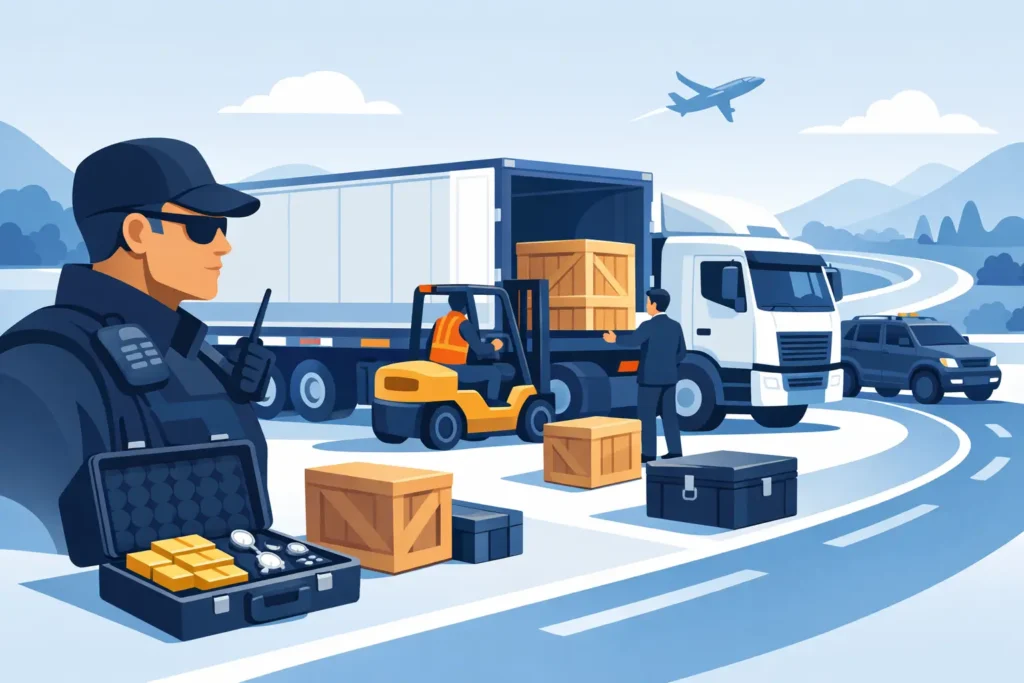
A missed handoff on a standard shipment is frustrating. A missed handoff on electronics, luxury goods, medical devices, or confidential equipment can become a financial loss, a security incident, and a customer escalation at the same time. That is why knowing how to ship high value goods by road is less about booking a truck and more about controlling risk at every stage.
Road transport remains one of the most practical options for high-value cargo, especially across regional and cross-border European routes. It offers direct movement, fewer touchpoints than some multimodal setups, and tighter scheduling control. But the same flexibility that makes road freight efficient can also create exposure if the shipment plan is too loose, the documentation is incomplete, or visibility drops once the vehicle leaves the loading site.
How to ship high value goods by road without avoidable risk
The safest approach starts before pickup. High-value shipments should never be treated like upgraded general freight. They need a transport plan built around the cargo’s real risk profile, not just its weight, pallet count, or destination.
That begins with a simple question: what makes this shipment valuable? Sometimes it is the invoice amount. Sometimes it is theft appeal, brand sensitivity, regulatory importance, or replacement difficulty. A pallet of consumer electronics, a crate of luxury retail items, and a calibrated medical machine may all carry similar declared values, but they do not carry the same transport risk. The correct road shipping setup depends on that distinction.
A practical plan usually covers vehicle selection, route strategy, loading controls, driver vetting, tracking expectations, proof-of-custody steps, insurance alignment, and delivery protocol. If one of those pieces is vague, the shipment is depending too much on luck.
Start with cargo classification, not just declared value
Declared value matters, but it is not the only number that should guide the movement plan. Operations teams should classify high-value goods by theft attractiveness, fragility, handling sensitivity, urgency, and whether the cargo can be visibly identified from packaging or paperwork.
For example, branded cartons create more risk than neutral packaging, even if the declared value is identical. Goods that cannot tolerate a warehouse dwell time may need direct road movement with tightly scheduled delivery windows. Equipment that is expensive but difficult to resell may face lower theft risk than small packaged luxury items, yet it may require stricter suspension, climate, or handling controls.
This is where many avoidable failures start. A shipper buys premium insurance and assumes the job is covered, but the operational profile of the cargo was never properly matched to the transport method.
Choose the road service level based on exposure
Not every high-value shipment needs the same service design. Some should move on a dedicated vehicle with no intermediate stops beyond legal requirements. Others can move in a controlled shared-load environment if custody procedures, route discipline, and tracking standards are strong enough.
Dedicated transport costs more, but it reduces handoffs, route complexity, and co-loading uncertainty. For highly sensitive cargo, that trade-off is often worth it. Shared road transport can still work for lower-risk high-value shipments, but only when the carrier can document how the cargo is segregated, secured, and monitored.
If the shipment crosses borders, customs timing and document readiness also become part of the risk model. Delays at border points increase dwell time, and dwell time increases exposure.
Security controls matter more than broad promises
High-value road freight should be protected by specific controls, not general statements about being careful. Ask how the load will be secured in the vehicle, who has access to it, what the parking rules are, and what happens if the route changes unexpectedly.
Good practice often includes vetted drivers, identity verification at collection and delivery, sealed loading, limited disclosure of cargo contents, and route planning that avoids unnecessary overnight parking. Real-time GPS tracking is no longer a premium extra for this category. It should be part of the baseline operating model.
There is also a difference between visible tracking and active shipment control. A map location is useful, but high-value shipments benefit most when tracking is tied to exception management. If the truck deviates from route, stops too long, approaches an unapproved zone, or misses a checkpoint update, someone should act immediately rather than report it later.
Plan around theft exposure, not just distance
A short route is not automatically safer than a longer one. Some corridors carry higher theft risk because of known cargo crime patterns, unsecured parking infrastructure, or poor overnight stop options. The best route balances transit time, road quality, border predictability, and security conditions.
That may mean avoiding a lower-cost route if it creates too many vulnerable pauses. It may also mean using team drivers or scheduled relays on longer runs where the cargo should not sit unattended. Faster is helpful, but controlled is better.
Packaging and labeling should reduce attention, not attract it
With high-value goods, packaging does two jobs at once. It protects the product from damage and protects the shipment from attention. Neutral outer packaging, discreet labels, tamper-evident sealing, and load plans that keep sensitive cargo out of sight all help reduce exposure.
This is one of the clearest examples of where value and fragility must be handled separately. A shipment may need shock protection, thermal control, or moisture barriers, but the outer presentation should remain low profile whenever possible. Overly descriptive labels, branded cartons, or documents attached externally can compromise an otherwise well-planned road movement.
Internal serial tracking also matters. If individual units, crates, or pallets are recorded before departure and verified at handoff, claims handling becomes far cleaner. More importantly, discrepancies can be identified immediately instead of days later.
Documentation is part of the security chain
When teams think about how to ship high value goods by road, they often focus on vehicles and insurance first. Documentation deserves the same attention. Incomplete or inconsistent shipment records create delays, weaken claims positions, and make custody disputes harder to resolve.
The shipment file should clearly match the commercial value, packaging count, handling requirements, collection party, delivery contact, and any security instructions. For cross-border road freight, customs documentation must be correct before departure, not fixed while the cargo is waiting.
Proof of custody should be built into the workflow. That means verified pickup confirmation, seal or unit checks, timestamped status updates, and delivery confirmation tied to an authorized recipient. For the highest-value movements, photo records and named handoff contacts may be appropriate.
Insurance should match the real movement conditions
Insurance is essential, but it does not replace operating discipline. It also does not always cover what shippers assume. Coverage limits, theft exclusions, unattended vehicle conditions, route restrictions, and commodity-specific clauses can all affect recovery.
Before booking, confirm whether the carrier’s liability is enough for the cargo value. In many cases, it will not be. Separate cargo insurance may be needed, especially when the shipment value is far above standard liability thresholds. The important point is alignment. If the policy requires certain security controls and the operation does not follow them, the paperwork may look fine until a claim is filed.
Carrier selection should be evidence-based
High-value road transport is not the place to buy on rate alone. The right carrier should be able to explain how they manage exceptions, what level of tracking they provide, how drivers are vetted, what their handoff process looks like, and how they handle route security.
Ask operational questions, not just commercial ones. Who monitors the shipment after hours? What is the escalation path if the vehicle is delayed? Are delivery appointments controlled? How are unplanned layovers handled? A carrier that cannot answer those points clearly is asking you to accept blind spots.
For businesses shipping regularly, consistency matters even more than one-off performance. A provider with documented process discipline, transparent communication, and 24/7 support will usually reduce long-term risk better than a cheaper option that relies on ad hoc coordination. This is where an integrated operator such as Alconedo can make sense for companies that want transport execution and visibility managed through one accountable framework rather than spread across multiple vendors.
Final delivery is where many losses happen
A shipment can be perfectly managed in transit and still fail at the final handoff. Delivery protocols should be as controlled as pickup protocols. Confirm the site, the recipient, the appointment window, and any unloading requirements in advance.
If the goods are especially sensitive, do not allow open-ended delivery instructions such as leaving cargo with warehouse staff who are not named on the order. Final delivery should include recipient verification and immediate confirmation that the shipment was received in expected condition and quantity.
That last mile of process discipline often decides whether a high-value road shipment feels controlled or exposed. The goal is not to eliminate every possible risk. It is to remove preventable uncertainty so the shipment stays visible, documented, and accountable from dispatch to handoff.
When value is high, the best road shipping plan is usually the one with the fewest assumptions.
