
Corporate Travel Booking Guide for Control
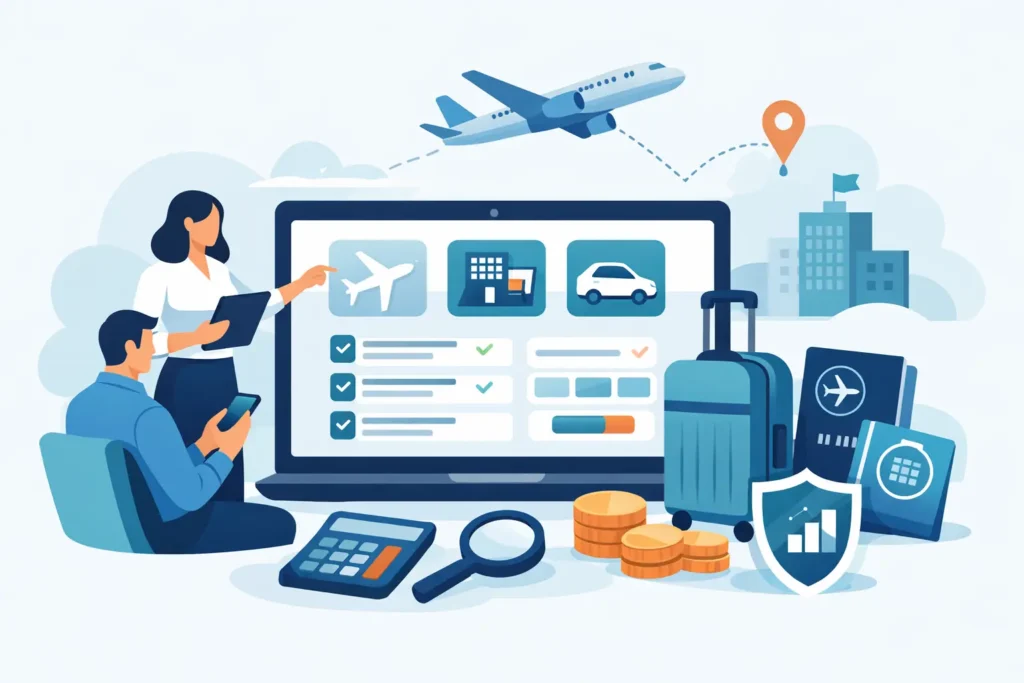
A missed connection is expensive. Not just because of the rebooking fee, but because it disrupts meetings, strains budgets, and forces someone on your team to start solving problems instead of doing their actual job. That is why a strong corporate travel booking guide matters. It gives your business a repeatable way to book flights, hotels, ground transportation, and changes with fewer surprises, better visibility, and tighter control.
For operations leaders, procurement teams, and travel coordinators, the real issue is rarely finding a flight. It is managing risk, enforcing policy, tracking spend, and supporting travelers when plans shift. A good booking process reduces coordination overhead and makes travel decisions easier to audit, approve, and improve.
What a corporate travel booking guide should actually do
A useful corporate travel booking guide is not a generic list of booking tips. It is an operating framework. It defines who can book, what can be booked, how approvals work, which suppliers are preferred, and what happens when a trip changes at the last minute.
That matters because business travel has competing priorities. Finance wants lower total cost. Travelers want practical schedules and safe accommodations. Managers want policy compliance. Operations wants visibility before, during, and after the trip. If your booking process only optimizes for the lowest fare, it usually creates more problems later.
The strongest travel programs focus on total trip performance. That includes fare class, cancellation rules, hotel location, airport transfer reliability, duty of care, and support availability. A cheaper itinerary with a tight layover and no change flexibility may cost more once delays, missed meetings, or emergency rebooking are included.
Start with policy before you start searching
Most corporate travel issues begin long before checkout. They start when booking rules are vague, scattered across emails, or enforced inconsistently. Before your team compares any options, define the booking policy in operational terms.
Specify who is allowed to book for themselves and when an arranger or travel manager must handle it. Set approval thresholds by trip cost, route, seniority, or booking window. Clarify which cabin classes are allowed, what hotel standards apply, and whether travelers can use personal loyalty programs without overriding company priorities.
This is also where you decide how flexible your policy should be. Some companies need strict controls because travel volume is high and cost discipline is non-negotiable. Others benefit from controlled flexibility, especially when senior staff, client-facing teams, or international travel require speed over rigid approval chains. It depends on how often your plans change and how much delay costs the business.
Build your booking workflow around speed and visibility
The best process is the one people will actually follow. If booking a compliant trip takes too long, employees will work around the system. That leads to fragmented invoices, poor reporting, and weak traveler visibility.
A practical workflow usually follows a clear path. Trip need is defined first, including destination, timing, purpose, and budget owner. Options are then compared against policy, not just price. Approval happens before ticketing when required. After booking, confirmations, traveler details, and support instructions should be stored in one place the company can access quickly.
Visibility is the difference between control and guesswork. Your team should be able to see where travelers are going, what has been booked, what can still be changed, and who to contact if a disruption happens. That becomes even more important when air, hotel, and local transportation are handled by separate vendors with separate support channels.
Flights: price matters, but timing and flexibility matter more
Air booking is where many companies focus first, and for good reason. It is often the largest travel expense line. But the cheapest fare is not always the smartest booking choice.
For short domestic trips, a low fare with minimal restrictions may be perfectly reasonable if meetings are fixed and the traveler can pack light. For multi-city routes, international travel, or schedules tied to client operations, flexibility often has more value than the initial savings. Change fees, baggage rules, airport choices, and arrival times all affect the real cost of the trip.
Booking window matters too. Last-minute business travel is sometimes unavoidable, but repeated short-notice bookings usually signal a planning problem. If your company books late often, review whether approval bottlenecks, poor calendar coordination, or fragmented booking responsibility are driving higher airfare.
A strong booking standard should also account for traveler fatigue. A late arrival before a critical meeting, or an overnight connection added to save a small amount, can reduce performance the next day. Operationally, that is not efficient.
Hotels: location beats rate when the trip is time-sensitive
Hotel booking should be treated as part of trip execution, not as an isolated line item. A lower nightly rate can look attractive until the traveler spends extra time commuting, misses breakfast before an early meeting, or struggles with late check-in after a delayed flight.
For business travel, location usually has the biggest operational impact. Proximity to the meeting site, airport, train station, or client facility often matters more than small differences in room rate. Safety, check-in reliability, cancellation terms, and invoice handling should also be built into the selection criteria.
For longer stays, practical amenities become more relevant. Wi-Fi quality, workspace setup, breakfast availability, laundry access, and flexible cancellation can affect both productivity and cost. A hotel that supports the traveler well reduces downstream issues your team would otherwise need to resolve.
Ground transportation is where trips often break down
A polished flight and hotel plan can still fail if the last mile is poorly managed. Airport pickups, city transfers, and urgent route changes are common friction points in business travel. They are also where visibility tends to disappear.
That is why ground transportation should be part of your booking process from the start. If a traveler lands late, who tracks the arrival? If a meeting location changes, how quickly can local transport be adjusted? If receipts are needed for reporting, are they captured consistently?
For many companies, using a connected approach across booking and local mobility reduces that friction. When travel planning and on-demand transportation are coordinated, travelers get clearer handoffs and support teams have a better view of the full trip. This is where a connected mobility provider such as Alconedo can make the process more controllable by combining travel booking with app-based local transport and real-time trip visibility.
Make traveler support part of the booking decision
Support is often treated as a separate issue from booking, but that is a mistake. The quality of support available after booking should influence which channel and supplier you use in the first place.
If your travelers are frequently on the move across cities or borders, self-service alone may not be enough. They may need after-hours changes, disruption support, document confirmation, or help coordinating airport-to-hotel transport after delays. In those cases, 24/7 proactive support is not a premium feature. It is part of operational continuity.
This is one of the clearest trade-offs in corporate travel management. Full self-service can reduce transaction costs, but it can also shift problem-solving to internal teams when things go wrong. Managed support may cost more upfront, yet save time and protect trip outcomes when schedules change under pressure.
Use data to improve your booking guide over time
No policy gets everything right on the first version. Travel patterns change. Supplier performance changes. Internal priorities change. Your booking guide should be reviewed using actual trip data, not assumptions.
Look at advance booking time, average ticket value by route, hotel spend by city, out-of-policy bookings, change frequency, unused tickets, and traveler support cases. Patterns usually appear quickly. You may find that one route needs a different booking window, one city needs a stronger hotel standard, or one team needs a faster approval path because delays are creating avoidable costs.
This is also where transparency matters. Teams are more likely to follow policy when they understand why it exists and when they can see that exceptions are handled fairly. A good guide supports compliance through clarity, not confusion.
Common booking mistakes that cost more than they save
The most expensive travel mistakes are rarely dramatic. They are usually small decisions repeated across many trips. Booking too late, ignoring change rules, separating ground transport from the rest of the itinerary, and choosing suppliers with weak support all create avoidable cost.
Another common mistake is treating every trip the same. Executive travel, client-facing travel, internal training trips, and project-based field travel do not always need identical rules. Standardization is useful, but over-standardization can force poor choices. The right level of control depends on the route, trip purpose, and business impact of delay.
A corporate travel booking guide should make those distinctions clear. It should help your team move faster on routine trips and make better decisions on high-impact ones.
The companies that handle travel well are not simply better at finding low fares. They are better at building booking systems that support accountability, traveler visibility, and fast response when conditions change. If your current process still depends on scattered confirmations, manual follow-up, and reactive fixes, that is usually the signal to tighten the workflow before the next trip tests it.
