
How to Send Urgent Parcels Without Delays
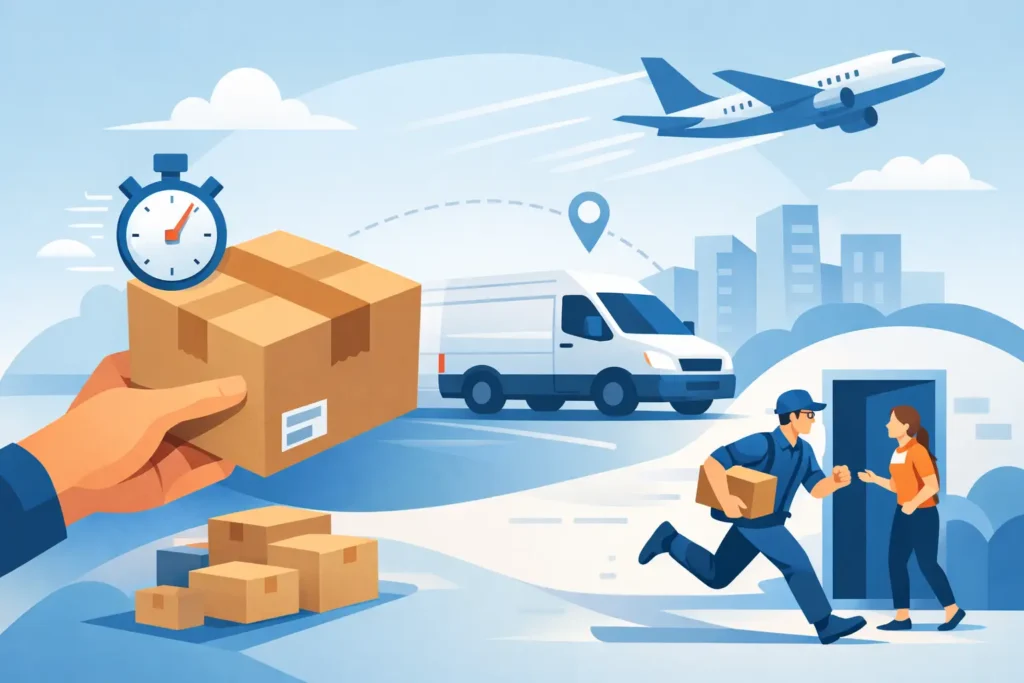
A missed part can stop a production line by noon. A forgotten passport can derail a business trip before check-in. When the shipment cannot wait, knowing how to send urgent parcels is less about finding any fast service and more about choosing the right delivery method, preparing the item correctly, and removing avoidable delays before they happen.
Speed matters, but control matters more. The fastest quoted transit time on a screen means very little if the parcel is packaged poorly, the address is incomplete, or the service level does not match the route. Urgent shipping works best when timing, documentation, tracking, and handoff are managed as one process.
How to send urgent parcels with the right service
The first decision is not courier versus van. It is how urgent the shipment really is. There is a major operational difference between same-day local delivery, next-flight-out movement, overnight domestic shipping, and scheduled cross-border transport. If you overbuy speed, you waste money. If you underbuy it, you lose the time you were trying to save.
For local urban deliveries, app-based courier dispatch is usually the fastest option because pickup can happen within minutes and tracking begins immediately. This works well for legal documents, keys, medical items, forgotten devices, and small business-critical packages. For longer domestic routes, express parcel networks are often the practical middle ground because they offer structured pickup windows, scanning events, and predictable cutoff times.
Cross-border urgent shipments need a different lens. Transit time is only one variable. Customs clearance, commodity type, documentation accuracy, and delivery restrictions can all affect the final timeline. In those cases, the right provider is the one that can coordinate the route, explain the paperwork, and maintain visibility from pickup through delivery.
That is where many urgent shipments go wrong. The sender focuses on advertised speed, while the real risk sits in routing complexity.
Match the parcel to the delivery method
Not every urgent parcel should move through a standard parcel network. Size, value, fragility, and handling requirements all change the best option.
A lightweight envelope with signed contracts can move differently from a temperature-sensitive sample or a high-value electronic device. If the item is fragile, expensive, regulated, or difficult to replace, direct delivery may be worth the premium because each additional handoff increases exposure to delay or damage. If the parcel is routine and well packed, an express network may offer the right balance of cost and speed.
Businesses should also think in terms of consequences. Ask what happens if the shipment arrives late by two hours, by one day, or not at all. That answer helps define whether you need dedicated movement, priority express, or a more flexible service level.
When same-day delivery makes sense
Same-day delivery is best when distance is short, urgency is real, and every minute after pickup matters. This includes replacement parts, legal filings, travel essentials, event materials, and hospital or lab-related documents. The advantage is direct execution with real-time map visibility and fewer transfer points.
The trade-off is cost and range. Same-day service is usually premium priced and may not be practical over longer intercity distances unless a dedicated vehicle is assigned.
When overnight or next-day is enough
If the parcel must arrive quickly but not immediately, overnight service can be the smarter choice. It is often more economical and still provides strong predictability if the shipment is tendered before cutoff. For many business senders, overnight is the operational sweet spot because it protects the timeline without forcing dedicated same-day resources.
Preparation is what protects urgent delivery
If you want to know how to send urgent parcels successfully, start with preparation. Most avoidable delays begin before the courier arrives.
Use packaging that matches the contents, not just what is available. An urgent item in weak or oversized packaging creates handling problems, scanning issues, and damage risk. Seal it securely, remove old labels, and make sure any barcode or shipping label is flat, visible, and scannable.
Address quality is equally important. Include the full recipient name, business name if relevant, street address, suite or unit number, ZIP code, and a reachable phone number. For urgent business deliveries, add department names, dock details, floor numbers, or receptionist instructions. A driver should not have to guess the final handoff point.
Timing details also matter. If the location closes at 5 p.m., a delivery promise of end-of-day may not be good enough. If the recipient needs to sign, confirm they will actually be available. Urgent shipping fails when senders assume access will be simple.
Documentation can be the difference between fast and stalled
Domestic urgent parcels are usually straightforward, but high-value goods, regulated items, and cross-border shipments require more discipline. A missing invoice, incorrect declared value, vague item description, or incomplete customs information can hold a parcel far longer than the transit time itself.
For cross-border movement, write item descriptions clearly and specifically. “Parts” is weak. “Industrial pump seal components” is better. Accuracy helps customs authorities and reduces the chance of inspection-related delays. If the parcel has batteries, medical content, or restricted materials, verify transport rules before booking.
This is one reason businesses often prefer a provider that can coordinate beyond pure transportation. Operational support, documentation review, and proactive exception management are not extras when the shipment is urgent. They are part of the delivery outcome.
Tracking should be active, not passive
Real-time tracking is useful only if someone is prepared to act on it. For urgent parcels, visibility should support decision-making, not just reassurance.
At minimum, monitor pickup confirmation, route progress, exception scans, and proof of delivery. If the parcel has a hard deadline, check whether the courier can provide milestone updates or direct driver communication through an app or dispatch team. When a delay appears, the response window is often small. You may need to reroute, alert the consignee, or arrange a fallback delivery location.
This is where tech-enabled courier and transport services have a clear advantage. Real-time GPS tracking, status notifications, and centralized communication reduce uncertainty and remove the need for repeated check-in calls. For time-critical shipments, that control is often as valuable as speed itself.
Cost matters, but failure costs more
Urgent parcel services can vary widely in price, and the cheapest option is rarely the best benchmark. The real calculation is total impact.
If a late parcel causes lost revenue, idle staff, canceled travel, or service failure, the shipping fee becomes secondary. That does not mean every urgent shipment deserves the highest-priced service. It means you should compare cost against business consequence, replacement difficulty, and timing sensitivity.
For individuals, this might mean paying more to get a passport, laptop, or house keys delivered the same day instead of risking a missed trip or hotel stay. For businesses, it might mean using dedicated transport for a mission-critical component while keeping standard overnight for routine replenishment.
Common mistakes when sending urgent parcels
The most common mistake is booking too late and assuming the courier can recover lost preparation time. The second is choosing a fast service while ignoring access restrictions, labeling problems, or documentation gaps. The third is treating all urgent shipments the same.
There is also a communication issue. If the shipment is truly time-critical, say so clearly. Share the delivery deadline, any access instructions, contact names, and handling requirements at booking. A precise brief gives dispatch teams and drivers the information they need to execute without back-and-forth.
For senders managing both local and longer-distance movement, it helps to work with a provider that can coordinate across categories rather than forcing you to switch between disconnected vendors. An integrated model such as Alconedo’s, spanning local courier execution, broader transport coordination, and real-time visibility, simplifies urgent movement because the process stays accountable from request to handoff.
A practical checklist before you book
Before sending, confirm five things: the true delivery deadline, the correct service type, complete recipient details, secure packaging, and any documentation required. Then verify tracking access and who will respond if something changes in transit.
That short discipline is what separates urgent shipping that performs from urgent shipping that merely sounds fast.
When the clock is tight, the best move is usually the clearest one: choose the service that fits the shipment, prepare it properly, and keep visibility active until proof of delivery is in hand.
