
Track a Taxi Ride in Real Time
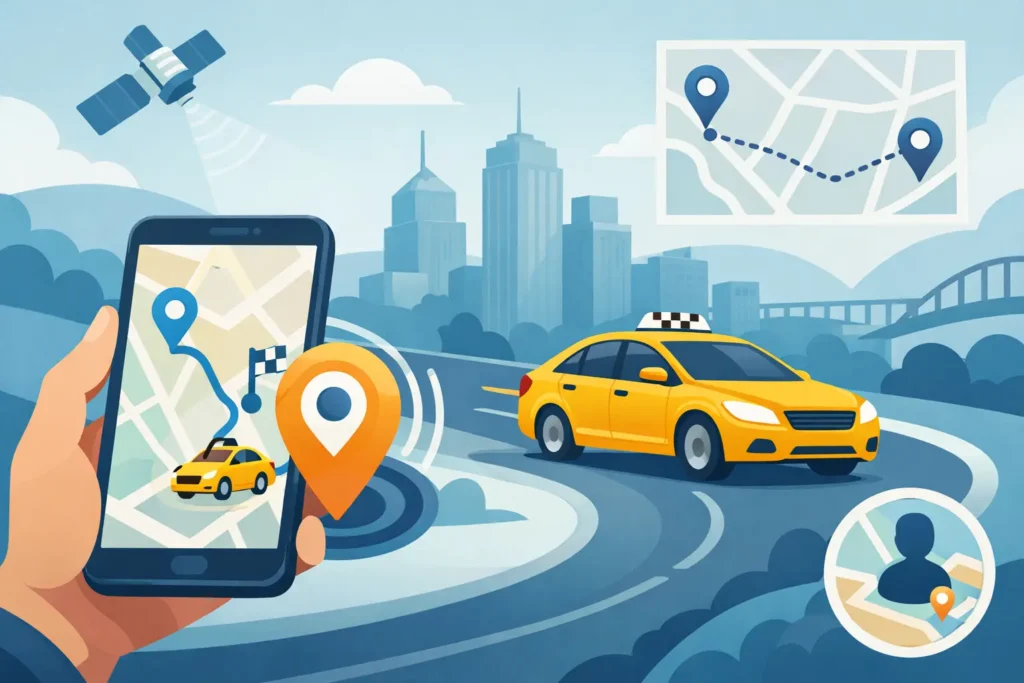
The moment a driver accepts your ride, the question usually stops being price and starts being visibility. You want to know where the car is, whether it is actually heading toward you, how long the wait will be, and what to do if the route changes. That is exactly why real-time tracking matters.
If you are wondering how to track a taxi ride in real time, the short answer is simple: use a taxi or ride-hailing app that shows live GPS location, trip status updates, driver identification, and route progress on a map. The better answer is more practical. Tracking works well when you know what data to look for, what can affect accuracy, and when to escalate to support.
How to track a taxi ride in real time from booking to drop-off
Real-time ride tracking usually starts the instant your booking is confirmed. In most app-based taxi systems, you will see a live map with the assigned vehicle moving toward your pickup point. That map is powered by GPS data from the driver’s device and the platform’s location services.
At the booking stage, the first thing to check is whether the app displays the driver’s name, vehicle make and model, license plate, and estimated arrival time. Those details are not just useful for convenience. They help you verify that the right car is approaching and give you a basic control point before you get in.
As the driver approaches, watch the route behavior instead of focusing only on the countdown timer. Estimated arrival times can shift with traffic lights, missed turns, road closures, and network lag. The map itself often tells the more reliable story. If the vehicle is stationary for several minutes or moving in the wrong direction, you can message or call the driver through the app before the delay becomes a missed pickup.
Once the trip begins, the app should continue displaying your live position, expected route, and updated time to destination. In stronger platforms, this is paired with trip-sharing features so a family member, colleague, or customer can follow the ride remotely. For airport pickups, business travel, or late-night rides, that extra visibility is often more valuable than the booking itself.
What a good live taxi tracking system should show
Not every tracking experience is equally useful. Some apps show a moving dot and little else. A better system gives you the operational details needed to make decisions quickly.
A reliable live tracking setup should show the driver’s current location, the route to pickup, the trip path after pickup, and dynamic ETAs. It should also make driver and vehicle verification easy to read. If the system includes status milestones such as driver assigned, driver arriving, passenger onboard, and trip completed, it reduces uncertainty at every handoff.
For passengers, that means fewer missed pickups and less time spent calling support. For businesses arranging employee transport or customer rides, it means stronger control and clearer accountability. If someone asks where the vehicle is, you should not have to guess.
This is where integrated mobility platforms stand out. A company built around transport visibility treats tracking as an operational standard, not a cosmetic app feature. On platforms such as Alconedo, real-time map tracking is part of the broader service promise around transparency, vetted drivers, and responsive support.
Why your taxi location may not look perfectly accurate
People often assume real-time tracking means exact, second-by-second precision. In practice, it depends on several moving parts.
GPS signals can weaken in tunnels, parking garages, dense downtown areas, or places with tall buildings. Mobile network quality matters too. If the driver’s device has a weak signal, the map may refresh slowly or jump between positions. Battery-saving settings can also reduce location update frequency.
There is also a difference between live movement and system processing. Some apps update continuously, while others refresh every few seconds. That small delay is usually harmless, but during tight pickups it can make the car appear closer or farther than it really is.
This is why tracking should be used as a control tool, not as a promise of perfect precision. If the car is one block away on the screen, treat that as near arrival, not a guarantee that it will stop in front of you immediately.
How to track a taxi ride in real time safely
Tracking is not only about convenience. It is one of the most useful safety features in app-based transportation.
Before entering the vehicle, match the license plate and car model in the app with the actual vehicle. Do not rely only on the driver saying your name. A proper tracking workflow starts with verification.
During the ride, compare the actual route with the route shown in the app. Drivers may reasonably adjust for traffic, construction, or police closures, so a route change is not automatically a problem. But if the car deviates significantly without explanation, ask the driver first. If the response is unclear or the route still does not make sense, use the app’s support or emergency tools.
Trip sharing adds another layer of control. If you are riding alone, especially at night or in an unfamiliar city, sending the live trip link to a trusted contact gives someone else visibility into your location and expected arrival. For employers arranging transport for staff, this same feature supports duty of care without requiring constant manual check-ins.
Best ways to use tracking without overreacting to delays
One common mistake is treating every ETA change as a service failure. Live ride tracking is useful because it shows what is happening in real conditions, not because it freezes the trip at the original estimate.
If pickup time increases by a minute or two, that is usually normal traffic variation. If the driver circles the block near your location, the issue may be pickup access, not driver error. Airports, hotels, office towers, and event venues often have restricted pickup zones that make the map look confusing.
What deserves attention is a pattern: long idle periods, repeated wrong turns, unexplained route changes, or a driver marked as arrived when the vehicle is clearly elsewhere. In those cases, use in-app messaging first. If there is no response or the status does not improve, cancel if the platform allows it without penalty or contact support.
A good support team should be able to see the same ride telemetry you see and act quickly. That matters when you are coordinating transport for a client, an employee, or a time-sensitive connection.
Tracking a taxi ride for someone else
There are plenty of situations where the passenger and the person monitoring the ride are not the same. Parents track rides for older teens. Executive assistants track airport pickups for travelers. Businesses monitor employee transport to and from meetings, hotels, or worksites.
In these cases, the key feature is shared trip visibility. The rider books the trip, then sends a live tracking link or app-based status share to the person who needs oversight. That person can see the car’s progress without calling the rider every few minutes.
This is especially helpful when timing matters. If a traveler is heading to the airport, a coordinator can see whether the vehicle is on schedule. If a customer is waiting for an arriving passenger, they can monitor the final approach instead of guessing based on text messages.
For companies, the value goes beyond convenience. Real-time tracking supports documentation, timing verification, and service quality review. It turns transport from a black box into a visible process.
What to do if live taxi tracking is not working
If the map is frozen or the driver location is missing, start with the simplest checks. Confirm that your phone has a stable data connection and that the app has location permissions enabled. Close and reopen the app if needed.
If the ride is active but the driver’s location still is not updating, contact the driver through the app. Sometimes the trip is moving normally and only the visual layer is delayed. If you cannot reach the driver and the platform is not showing clear trip status, contact support right away.
For future rides, choose providers that make tracking a core part of the service rather than an occasional feature. The difference shows up when things go wrong. Strong operations teams do not just display a map. They back it with support, driver verification, and clear communication.
Real-time tracking works best when it gives you more than visibility. It should give you confidence that the ride is moving as planned, a quick way to intervene when it is not, and a record you can trust when timing matters. That is the standard passengers and businesses should expect from modern taxi service.
