
How Real-Time Taxi Pricing Actually Works
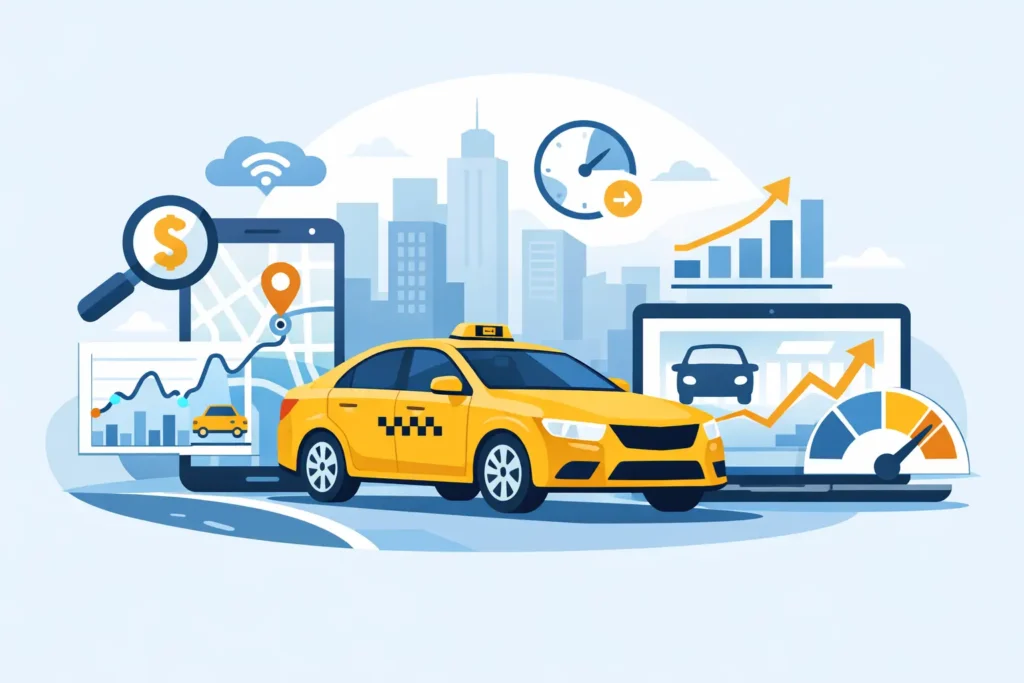
A five-minute ride can cost less than your morning coffee at 2:00 p.m. and noticeably more at 6:05 p.m. on the same route. That price difference is not random, and it is not just about traffic. Real-time taxi pricing is a live calculation model that responds to conditions as they change, often in seconds.
For riders, that means the fare you see reflects what is happening in the market right now. For operators, it is a way to match vehicle supply with rider demand while keeping service available during busy periods. If you have ever asked, how does real time taxi pricing work, the short answer is this: the platform combines trip variables, market conditions, and pricing rules into a live fare estimate before you book, then updates the final fare based on what actually happened during the ride.
How does real time taxi pricing work in practice?
At the core, every fare starts with a base structure. That usually includes a pickup fee or base fare, a per-mile rate, a per-minute rate, and any fixed charges required by the city, airport, or local regulations. Those components are familiar because traditional metered taxis use them too.
What makes real-time pricing different is the live layer on top. The system checks current demand in a zone, the number of available drivers nearby, expected route duration, local traffic speed, time of day, and service type. It may also consider tolls, booking channel, and temporary operating conditions such as bad weather or event traffic. Instead of relying only on a meter running in the car, the app or dispatch platform calculates an estimated fare before the trip begins.
That estimate is not created by a person behind a desk. It is generated by pricing logic tied to mapping, dispatch, and driver availability systems. In a tech-enabled taxi operation, those systems are connected in real time so the customer can see price visibility before committing to the ride.
The inputs behind live fare calculations
Distance is the most obvious factor, but it is only one part of the fare. A short ride through a congested downtown corridor can cost more than a longer trip on clear roads because time matters almost as much as mileage. If a vehicle is moving slowly or stopping often, the pricing model accounts for the driver’s active working time, fuel consumption, and reduced vehicle turnover.
Demand pressure is another major input. When a large number of riders request cars in the same area at the same time, the platform may apply a higher rate or multiplier. This is often called surge or dynamic pricing. The goal is not only revenue. Operationally, it is used to encourage more drivers into the area and prevent total service collapse during peaks.
Supply matters just as much. If there are many available drivers near you, prices may stay close to the standard rate. If only a few vetted drivers are available and multiple requests are coming in, the algorithm recognizes that tighter capacity and adjusts the fare accordingly.
Traffic data also changes pricing in practical ways. If a route normally takes 12 minutes but current traffic pushes it to 25, the expected trip cost rises before pickup. That is why two riders ordering from the same address to the same destination at different times of day can receive different prices.
Then there are policy and service variables. An airport pickup may include airport access fees. A larger vehicle may carry a different base rate. A premium service may price for vehicle class and driver standards, not just trip length. Some platforms also treat pre-booked rides differently from immediate on-demand rides because planned dispatch improves utilization.
Why prices move up and down so quickly
Real-time taxi pricing changes quickly because the operating environment changes quickly. A sudden rainstorm can shift demand in minutes. A concert ending can create a temporary spike across several city blocks. A traffic accident can slow a major corridor and extend trip times across a zone.
In older taxi models, the meter mostly reflected what happened once the passenger was inside the car. In app-based systems, pricing starts earlier. It predicts what is likely to happen before the ride begins, then compares that prediction with actual trip data.
This matters because urban transportation is a live network problem, not a fixed retail product. The car, the driver, the route, the time window, and the demand pattern are all moving at once. Pricing has to keep up if the operator wants to maintain availability and avoid overpromising service it cannot deliver.
That is one reason technology-forward operators emphasize real-time map tracking, dispatch visibility, and transparent communication. Pricing accuracy improves when location data, route forecasting, and capacity management are working from the same live view.
What riders usually see versus what the system is doing
From the customer side, the process looks simple. You enter pickup and drop-off points, select a service type, and receive an upfront estimate or fare range. Behind that simple screen, the system is checking driver proximity, road conditions, historical trip data, local pricing rules, and current request volume.
If the platform offers an upfront fare, that amount is often based on predicted distance and time rather than only the final meter output. If major trip changes happen, such as a destination update, a long stop, or a forced reroute, the final fare can change. If the platform uses an estimate instead of a locked fare, then the meter-like logic continues adjusting the total during the trip.
This is where transparency matters. Riders generally accept variable pricing when they can see it before booking and understand why it changed. They are far less accepting when fees appear late or fare logic feels inconsistent. Good operations reduce that friction by showing the trip basis clearly and keeping exceptions limited and documented.
The trade-offs of dynamic pricing
Dynamic pricing solves a real operational problem, but it has trade-offs. For riders, the benefit is better vehicle availability when demand is high. The downside is obvious: peak periods can be more expensive.
For drivers and fleet operators, higher pricing during busy windows can improve earnings and attract more coverage where it is needed. But if price increases are too aggressive, riders may delay travel, abandon the booking, or lose trust in the platform.
For cities and regulators, the balance is even more delicate. Real-time pricing can improve service coverage and reduce shortages, but it also raises fairness questions during emergencies, transit disruptions, or severe weather. That is why some markets impose caps, disclosure rules, or licensing conditions on how taxi platforms adjust fares.
So if you are asking whether real-time taxi pricing is good or bad, the honest answer is that it depends on execution. When the model is transparent, bounded by clear rules, and tied to actual operating conditions, it helps match service to demand. When it feels unpredictable or opportunistic, it damages confidence.
How to read a fare before you book
The best way to evaluate a real-time fare is to look at the trip context, not just the number. Ask whether demand is peaking, whether weather is affecting supply, whether your route includes tolls or heavy congestion, and whether you are booking immediately or in advance.
A fare that looks high at first may be reasonable if traffic is severe and vehicle availability is tight. On the other hand, a noticeable price jump for a routine trip during a normal off-peak period may signal a temporary imbalance or a service tier change you did not intend to select.
This is also why clear service labeling matters. Economy, standard, XL, premium, and courier-style local delivery each carry different operating assumptions. Comparing them without checking vehicle type, speed of dispatch, and service terms can create confusion about whether the fare is actually high or simply based on a different service level.
For riders who value control, the most useful platforms are the ones that provide upfront fare visibility, real-time driver tracking, and responsive support if the trip changes. That combination turns pricing from a black box into a service decision you can manage.
Where this is heading
Real-time pricing is becoming more precise because mobility systems now have better live data. As dispatch platforms, mapping tools, telematics, and customer apps become more integrated, fare estimates should become more accurate before booking and easier to explain after the trip.
That is especially relevant for companies operating across multiple movement categories. A business coordinating freight, travel, and urban rides already thinks in terms of capacity, timing, routing, and service visibility. The same operational discipline that improves cross-border transport or travel coordination also improves local ride pricing. That is part of why integrated platforms such as Alconedo can position pricing transparency as an operational capability, not just an app feature.
The most useful mindset for riders is simple: real-time taxi pricing is not guessing what your trip might cost. It is measuring current conditions and assigning a live price to available service. When that system is built well, you get faster decisions, clearer expectations, and fewer surprises after pickup.
The next time a fare changes between lunch and rush hour, read it as a live signal from the network. It is telling you what capacity, timing, and road conditions look like right now, and that is often more useful than a cheap estimate that cannot actually be delivered.
