Cross Border Road Transport Guide for Businesses
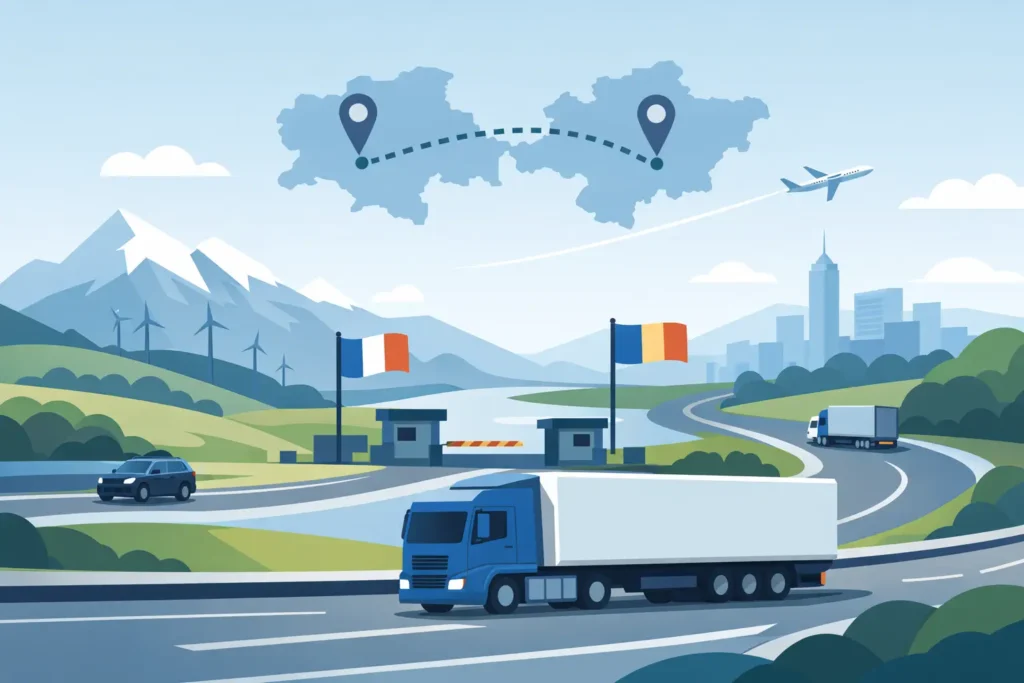
A truck can be on schedule at departure and still miss a delivery window by a full day because one customs document uses the wrong commodity description. That is why a cross border road transport guide for businesses needs to focus less on theory and more on control points. When freight moves across borders, small errors multiply fast. The businesses that perform well are not always the ones paying the lowest rate. They are the ones managing documentation, routing, timing, and visibility with discipline.
Cross-border road transport looks straightforward on paper. A vehicle loads, crosses one or more borders, clears the required checks, and unloads. In practice, every stage has a dependency. Driver hours affect handover timing. Border congestion affects booked unloading slots. Customs readiness affects whether cargo keeps moving or waits in a yard. For operations teams, the real job is reducing avoidable delay while keeping cost predictable.
What businesses need from cross-border road transport
Most companies do not just need a truck. They need a transport setup that protects customer commitments, production schedules, and cash flow. That changes the conversation.
If your cargo supports retail replenishment, late arrival can mean empty shelf space and chargebacks. If it supports manufacturing, one delayed shipment can interrupt a line. If it is high-value equipment or sensitive goods, visibility and chain of custody may matter more than a small rate difference. Cross-border transport decisions should be made against the cost of failure, not just the price of movement.
This is where many procurement discussions go wrong. A lower base quote can be attractive, but it may exclude customs coordination, live tracking, exception handling, or document support. Those gaps usually reappear later as cost, delay, or internal workload.
Cross border road transport guide for businesses: start with the shipment profile
The right road transport plan depends on what you are moving, how often you move it, and what happens if delivery slips. A standard palletized shipment on a stable lane is one thing. Temperature-sensitive product, oversized equipment, urgent spare parts, or mixed-load freight are all very different operating environments.
Start by defining cargo type, dimensions, weight, packaging standard, origin, destination, border crossings, delivery deadline, and any special handling requirements. Then add the operational constraints around it. Does the consignee require a booked delivery slot? Is there limited unloading equipment on site? Does the route include areas with recurring congestion, weather disruption, or weekend driving restrictions?
The point is simple. Businesses get better transport outcomes when they design the move around the shipment instead of forcing the shipment into a generic transport model.
Full truckload, groupage, and dedicated options
Full truckload makes sense when volume is high enough, delivery timing is tight, or cargo sensitivity justifies direct movement. Groupage can reduce cost for smaller loads, but it usually introduces more touchpoints and less control over exact timing. Dedicated vehicles are often the right answer for urgent, high-value, or specialized cargo because they reduce dependency on hub operations and consolidation schedules.
There is no universal best option. It depends on the cost of delay, the value of direct routing, and the predictability your business needs.
Documentation is where delays often begin
Cross-border road freight is operationally simple only when paperwork matches the shipment exactly. That includes commercial invoices, packing lists, transport instructions, customs data, commodity descriptions, and any route-specific requirements. Problems usually come from inconsistency rather than absence. A mismatch between declared goods and loading documents is enough to stop movement.
Businesses should treat documentation as part of transport planning, not an admin task at the end. Internal handoffs matter here. Sales may describe goods one way, warehouse teams another way, and finance may invoice them differently. Border processes do not tolerate that kind of ambiguity.
For repeat lanes, documented templates help. For new products or destinations, extra validation is worth the time. A few minutes of checking before departure is far cheaper than a vehicle standing still at a border or customs facility.
Customs readiness is not optional
Even when a route is common, customs requirements can shift with product type, trade status, or destination rules. Businesses should know who is responsible for declarations, supporting documents, duties, and communication if cargo is selected for inspection. If that responsibility is unclear before pickup, the risk is already in the system.
A dependable transport partner should be able to explain document flow, escalation paths, and what happens if customs requests clarification. Visibility is not just about knowing where the truck is. It is also about knowing whether the shipment is administratively ready to keep moving.
Transit time planning should include buffer logic
One of the biggest mistakes in cross-border transport is treating estimated transit time as guaranteed elapsed time. Road movement is exposed to border queues, inspections, weather, ferry timing, traffic restrictions, and loading delays at both ends. Good planning accounts for that reality.
That does not mean adding random extra days to every move. It means building practical buffers around known risk points. If a lane regularly experiences congestion at a specific crossing, schedule around it. If unloading sites are strict on missed slots, allow for earlier arrival windows or recovery options. If cargo is urgent, dedicated routing and proactive monitoring may protect the timeline better than a cheaper shared model.
Reliable transport is usually the result of planned contingency, not optimism.
Visibility matters before, during, and after the move
A shipment update is only useful if it helps someone make a decision. Real-time map tracking, milestone reporting, and proactive exception alerts give operations teams control over border moves that would otherwise feel opaque.
Before transit, visibility means confirming booking details, documents, vehicle allocation, and departure timing. During transit, it means knowing location, estimated arrival, and whether a border or route issue is developing. After delivery, it means having proof of delivery, incident records if applicable, and documented closure for internal compliance.
This is one reason businesses increasingly favor providers with integrated operational systems. When transport data, customer communication, and support escalation sit in one workflow, problems are identified earlier and handled with less friction. That is the kind of control model companies look for at https://www.alconedo.com, especially when freight, travel, and local mobility needs all need coordination under one accountable structure.
Carrier selection is really a risk decision
Rate still matters, but in cross-border transport, carrier selection is mainly about risk management. A suitable provider should have proven experience on the relevant lanes, a clear process for customs coordination, vetted drivers, documented operating procedures, and 24/7 support when shipments are in motion.
Ask practical questions. How are delays escalated? What tracking data is available? How are delivery appointments managed? What happens if a driver reaches the border and a document issue appears? Can the provider support specialized cargo or urgent redeployment if plans change?
The strongest partners are usually not the ones promising that nothing will go wrong. They are the ones with the systems and discipline to respond quickly when something does.
When specialized transport changes the plan
Some shipments need more than standard road capacity. Oversized machinery, fragile equipment, regulated goods, or high-security cargo may require route surveys, permits, special equipment, escort planning, or tighter handling controls. In those cases, transport should be scoped as a project, not booked as a routine shipment.
The cost profile will be higher, but so is the exposure if planning is weak. Specialized transport rewards precision.
How to reduce internal coordination overhead
Many businesses lose time not because the road leg is difficult, but because too many teams are involved without one operating view. Procurement negotiates rates, warehouse prepares freight, compliance handles documents, customer service updates delivery expectations, and finance checks trade paperwork. If those functions are disconnected, transport performance suffers.
A better model is to define shipment ownership clearly. One team or partner should control milestone tracking, exception response, and communication across the move. That creates accountability and shortens decision time when conditions change.
For growing businesses, this matters even more. As lane count expands, manual coordination becomes expensive and inconsistent. Process discipline and connected technology are what keep scaling from turning into confusion.
Cross border road transport guide for businesses: the practical standard
If you want consistent cross-border performance, set a practical standard. Know the shipment profile. Validate documents early. Match service type to urgency and cargo risk. Build realistic transit buffers. Use live visibility tools. Choose carriers based on operating control, not rate alone. Review failures closely, because most recurring delays leave a pattern before they become a major cost issue.
Cross-border road freight will never be risk-free. Borders, regulations, and transport networks move too dynamically for that. But it can be controlled far more tightly than many businesses assume. The companies that treat transport as an accountable process rather than a booked event usually protect service levels better, spend less time firefighting, and make stronger promises to their own customers.
The useful question is not whether a shipment can cross a border. It is whether your process can keep it moving when the route stops behaving like the plan.
