
9 Best Ways to Reduce Corporate Travel Costs
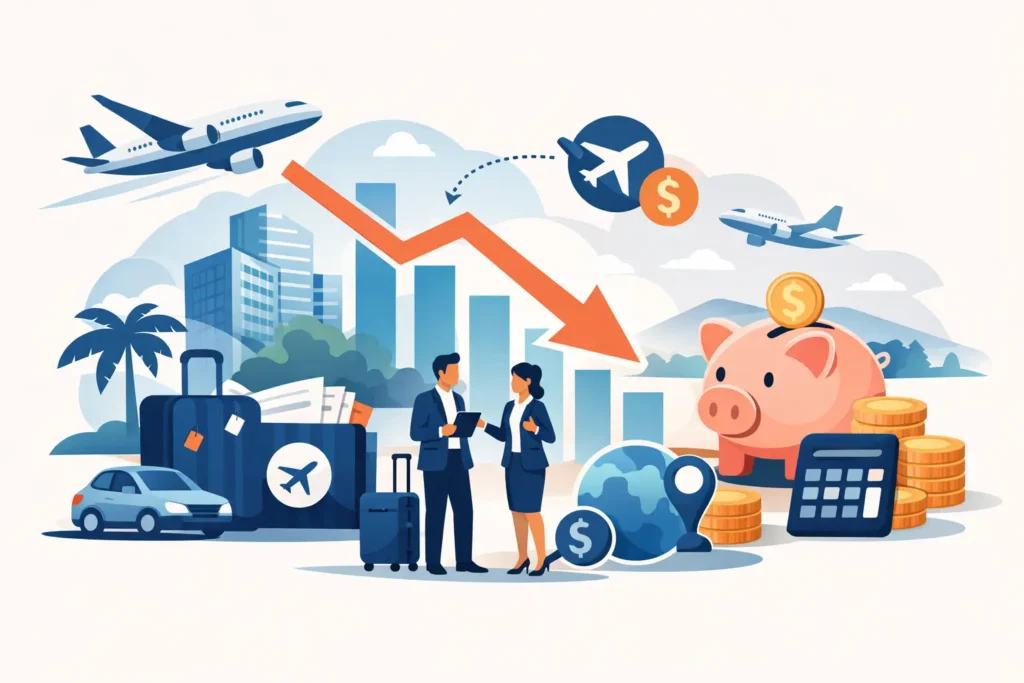
A sales leader books a last-minute flight at 6 p.m. The hotel is near the client, but the airport transfer is surge-priced, the rental car sits unused, and two expense corrections show up a week later. None of those line items look dramatic on their own. Together, they explain why the best ways to reduce corporate travel costs start with control over the full journey, not just cheaper airfare.
For most companies, travel spend leaks through small operational gaps – inconsistent booking behavior, weak policy enforcement, poor visibility into ground transport, and disconnected vendors. Cutting cost without damaging traveler productivity requires a tighter system. The goal is not simply to spend less. It is to spend with more accuracy, better timing, and fewer exceptions.
Best ways to reduce corporate travel costs without losing control
The biggest savings usually come from standardizing decisions that are currently made ad hoc. When every traveler chooses their own booking channel, fare class, hotel area, and local transport method, cost becomes hard to predict and harder to manage. A clear operating model fixes that.
Start with booking windows. Advance booking is still one of the most reliable ways to lower airfare and hotel rates, but policy alone is not enough. Teams need practical rules tied to trip type. A client meeting planned three weeks out should not be booked like an emergency site visit. Create thresholds by purpose, such as a minimum number of days for routine internal travel and a documented exception path for urgent trips. That protects flexibility while reducing avoidable premium fares.
Supplier consolidation matters as well. Working across too many airlines, hotel groups, car rental providers, and local ride options creates admin overhead and weakens buying power. Fewer vendors often means better negotiated rates, simpler invoicing, and clearer service accountability. The trade-off is that over-consolidation can reduce flexibility in smaller markets, so the right model is usually a preferred supplier structure rather than total exclusivity.
Ground transportation is another common blind spot. Companies negotiate air and hotel rates, then let airport transfers, taxis, and local rides operate without controls. That is expensive. Standardizing local mobility, especially in high-frequency cities, can cut overspend and improve traveler timing. When the trip includes airport transfers, in-city meetings, and parcel or document movement, managing those services through one operational framework reduces duplicate bookings and last-minute premium charges.
Build policy around behavior, not just rules
A travel policy fails when it reads like procurement language and ignores how people actually move. If travelers need to work around it to get the trip done, leakage will continue.
The most effective policies are precise on cost controls and realistic on traveler needs. Define when economy is required, when premium options are allowed, what hotel tier is acceptable by city, and how ground transport should be selected. Then connect each rule to business logic. For example, allowing a higher room rate within walking distance of the client site may cost less overall than a cheaper hotel that requires multiple ride bookings and more travel time.
Approval workflows should also reflect trip value and risk. A simple domestic trip does not need the same review path as a multi-city international itinerary. Too much friction drives off-policy booking. Too little control drives unnecessary spend. A tiered approval model keeps both speed and oversight.
Just as important, measure compliance in operational terms. Instead of only asking whether a booking matched policy, review how often exceptions occurred, how much they cost, and whether they were justified. That gives procurement and operations teams something more useful than a compliance percentage. It shows where process design is creating avoidable cost.
Use data to find where travel spend actually leaks
If reporting stops at total monthly spend, cost reduction will stay superficial. The useful view is more granular: booking lead time, route-level fare variation, hotel nightly rate by city, no-show frequency, change fees, canceled segments, and local transport variance.
This is where many travel programs underperform. They can tell you what was spent, but not why the spend was high. Was the issue late approvals, route concentration, poor hotel selection, or heavy use of unmanaged taxis? Each problem needs a different fix.
A connected booking and mobility environment helps teams see the full movement pattern rather than isolated transactions. That matters because cost often shifts between categories. A cheaper flight with a midnight arrival may create a more expensive hotel pattern or higher transfer costs. A lower hotel rate outside the business district may increase ride volume and lost time. Good travel management looks at total trip cost, not isolated line items.
For companies managing frequent business movement across regions, this is where integrated visibility becomes valuable. Platforms such as Alconedo can support that broader view by combining corporate travel booking with local ride coordination, which makes policy enforcement and spend tracking more practical across the full trip lifecycle.
Reduce change fees and unmanaged exceptions
A surprising share of travel waste comes from changes that could have been prevented or absorbed better. Rebookings, missed connections, duplicate reservations, incorrect passenger details, and last-minute itinerary shifts can quickly erase any negotiated rate advantage.
Part of the fix is booking discipline, but part of it is operational support. Travelers need fast rebooking paths and clear communication when plans change. If support is slow or fragmented, people solve the problem themselves and expense the result later. That usually costs more.
There is also a policy question here. The cheapest fare is not always the lowest-cost option if the trip has a high probability of moving. For sales travel, project work, and cross-functional site visits, paying slightly more for a fare with lower change penalties may be the smarter financial decision. It depends on trip volatility. Procurement teams that only optimize for upfront price often miss this.
Rethink hotels and local transport as one cost center
Airfare usually gets the attention, but hotel and ground spend can be more controllable because the variables are more local and repeatable. Many companies save money simply by defining preferred hotel zones instead of naming a single preferred property. That gives travelers options while keeping them inside an acceptable rate and distance range.
Location strategy is critical. A hotel near the meeting site, train station, or airport can lower total cost even if the room rate is slightly higher. The savings show up in fewer ride claims, lower risk of delays, and tighter scheduling. This is especially true for short trips where every transfer adds cost and complexity.
The same logic applies to cars versus rides. A rental car may look efficient on paper but become wasteful if parking, idle time, fuel, and low utilization are factored in. In dense urban markets, managed ride services are often the cleaner option. In multi-stop regional travel, rentals may still make sense. The decision should be made by trip pattern, not habit.
Give travelers better tools so they make cheaper choices
People do not consistently make cost-effective decisions when pricing, policy, and logistics are scattered across email threads, expense apps, and consumer booking sites. If you want lower travel costs, make the right choice easier than the expensive one.
That means giving travelers a booking path with visible policy guidance, preferred options, and support access in the same workflow. It also means reducing the number of handoffs between travel booking, approvals, expense capture, and local mobility. Every extra step increases the chance of off-policy behavior.
Technology should improve control, but it should also improve speed. Travelers are more likely to follow process when they can compare options quickly, see what is approved, and get real-time updates. For operations teams, centralized visibility reduces manual chasing and helps resolve issues before they become expensive exceptions.
Make cost reduction a service outcome, not a one-time project
The best ways to reduce corporate travel costs are not dramatic. They are operational. Book earlier when the trip is predictable. Consolidate suppliers where it improves leverage. Build realistic policy. Track total trip cost, not isolated categories. Standardize ground transport. Use data to catch repeat leakage. And give travelers tools that make compliant choices faster.
The companies that control travel spend best are usually not the ones with the harshest rules. They are the ones with the clearest systems. When travel, local transport, support, and spend visibility work together, savings stop depending on constant policing and start showing up as part of normal operations.
A useful next step is simple: pick one frequent route, one common city pair, or one repeat traveler group and map every cost around the trip. That is where the waste usually becomes obvious – and where better control starts paying back quickly.
