
What a Parcel Delivery App Should Do
A missed handoff can wreck more than a schedule. It can delay a contract, leave a customer waiting, or force a team member to spend half the day chasing updates instead of doing actual work. That is why a parcel delivery app is no longer a convenience feature for urban mobility. It is an operational tool, and the difference between a good one and a weak one shows up fast.
For individual users, the test is simple: can you book quickly, see the driver, trust the timing, and know the cost up front? For businesses, the standard is higher. They need a parcel delivery app that reduces coordination, creates visibility, and gives them confidence that the delivery will happen as promised.
Why a parcel delivery app matters now
Local delivery used to be handled through a patchwork of calls, texts, dispatch boards, and improvised courier arrangements. That model still exists, but it breaks down under pressure. As soon as volume increases, urgency rises, or multiple stakeholders get involved, manual coordination starts creating failure points.
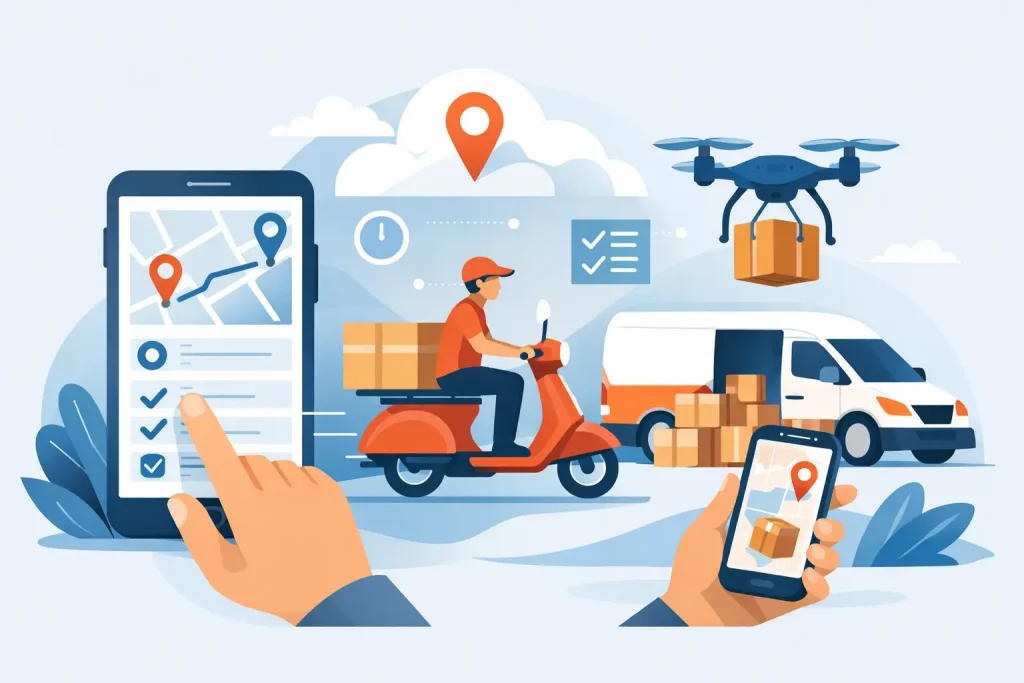
A well-built parcel delivery app fixes that by turning each delivery into a trackable workflow. Booking, driver assignment, route visibility, status updates, proof of completion, and customer communication all sit in one place. That matters whether you are sending legal documents across town, moving retail stock between locations, or delivering a forgotten laptop to an employee before a client meeting.
There is also a bigger shift behind this. Customers now expect the same level of control from local delivery that they expect from ride-hailing and travel booking. They want live map tracking, transparent pricing, digital receipts, and clear accountability if something changes. If an app cannot provide that, users notice immediately.
What users expect from a parcel delivery app
Speed gets attention first, but reliability keeps customers coming back. A parcel delivery app should make the booking process short and clear, with pickup and drop-off details that are easy to enter and easy to verify. If users have to guess the service level, the vehicle type, or the final price, trust starts eroding before the job even begins.
Real-time GPS tracking is no longer optional. It gives senders visibility, helps recipients prepare, and reduces inbound support requests. More importantly, it creates operational proof. If a shipment is delayed by traffic, building access, or a handoff issue, everyone can see what is happening instead of relying on vague updates.
Transparent pricing matters just as much. Some deliveries are straightforward, while others involve waiting time, special handling, multiple stops, or fragile contents. A good app does not hide that complexity. It makes charges understandable so users can make informed decisions before confirming the order.
Support is where many platforms separate into two categories: consumer-friendly and truly dependable. If something goes wrong, users should not be left with a chatbot loop and no ownership. They need responsive human support backed by clear delivery records and visible status data.
The difference between convenience and operational control
Many apps can move a small package from point A to point B. Fewer can do it with the level of control that businesses require. That difference matters if the parcel is time-sensitive, valuable, customer-facing, or tied to a larger process.
Operational control starts with vetted drivers and documented procedures. It continues with accurate ETAs, consistent status milestones, and delivery confirmation that can be referenced later. For a business user, those details are not extras. They are part of service quality.
The strongest apps also account for exceptions. What happens if the recipient is unavailable? What if the package requires signature confirmation? What if the sender needs to change the destination after booking? A parcel delivery app built for real-world use should handle these situations without forcing the user back into manual coordination.
This is where an integrated movement company has an advantage. Organizations that already manage transport, routing, and live trip visibility tend to approach local parcel delivery with more process discipline. That leads to better communication, more predictable execution, and fewer avoidable surprises.
Features that actually improve delivery performance
Not every feature improves outcomes. Some look good in a demo but do little in day-to-day operations. The features that matter most are the ones that reduce friction and increase certainty.
Accurate booking inputs are the first example. If the app allows users to specify parcel size, urgency, handling needs, and recipient instructions clearly, driver matching improves and service issues drop. The more precise the job setup, the fewer delivery failures happen downstream.
Live tracking is next, but it only works if the location data is reliable and the status language is clear. Users should be able to tell whether the driver is assigned, en route to pickup, at pickup, in transit, or completed. Vague updates create more anxiety than no updates at all.
Digital proof of delivery is another core feature. That can include a signature, a photo, a timestamp, or recipient confirmation. For individuals, it provides peace of mind. For businesses, it supports internal recordkeeping, customer service, and dispute resolution.
Notification design matters too. Too many updates become noise. Too few create uncertainty. The right balance depends on the use case. A legal courier job may require tighter milestone communication than a low-value personal drop-off. Good app design recognizes that different deliveries need different communication intensity.
When businesses need more than basic app delivery
A local parcel run might seem simple, but many business deliveries are connected to larger operational chains. A delayed handoff can affect field staff, inventory availability, service appointments, or customer commitments. That is why procurement teams and operations managers often evaluate a parcel delivery app differently than individual users.
They care about repeatability. Can the service perform consistently across high-frequency requests? Can they access delivery records when needed? Can internal teams trust the ETA enough to plan around it? These are practical questions tied to cost control and service continuity.
There is also the issue of coordination overhead. If staff still need to make calls, confirm updates manually, and chase delivery evidence after each job, the app is not really saving time. It is just changing the interface. The real value comes when the platform reduces administrative work while improving visibility.
This is especially relevant for companies that already manage travel, freight, and local movement across multiple channels. A connected service model can remove friction between those categories. For example, the same business that books corporate travel and cross-border transport may also need urgent local courier support. Working with one coordinated provider can simplify vendor management and create clearer accountability. That integrated approach is part of why companies like Alconedo are positioning movement as one connected operational system rather than a set of unrelated services.
What to watch for before choosing a parcel delivery app
The best app for one user may be the wrong fit for another. A student sending a forgotten charger across town has different priorities than a company delivering signed documents before a deadline. It depends on delivery frequency, parcel value, urgency, and the level of control required.
If price is the only factor, users may end up choosing a platform that performs well only under ideal conditions. That can work for low-risk deliveries. It is a weaker choice when timing or accountability matters. In those cases, a slightly higher transaction cost may be justified by better tracking, stronger support, and fewer failed attempts.
Coverage area also matters. Some apps perform well in dense urban centers but struggle at the edges of the service zone. Others have enough driver density for passenger rides but not enough courier capacity during peak periods. Users should pay attention to actual delivery performance, not just service availability on paper.
Finally, look at how the app handles communication. A parcel delivery app should not force users to guess who owns the problem when plans change. Clear status updates, transparent support channels, and documented delivery milestones are signs of a service designed for accountability, not just order volume.
The real standard is trust
The most useful parcel delivery app is not the one with the flashiest interface. It is the one that gives users control without adding work. That means fast booking, clear pricing, real-time visibility, dependable driver execution, and support that responds when timing matters.
As local delivery becomes part of everyday business operations and personal logistics, expectations will keep rising. Users will not just compare courier apps against each other. They will compare them against the best digital experiences they already know from travel, transport, and on-demand mobility.
That raises the bar in a good way. It pushes providers to prove reliability, not just promise convenience. And for customers, that is the right standard to hold: if an app is trusted with movement, it should show exactly where things stand and make the next step clear.
