
Shipment Visibility and Exception Control
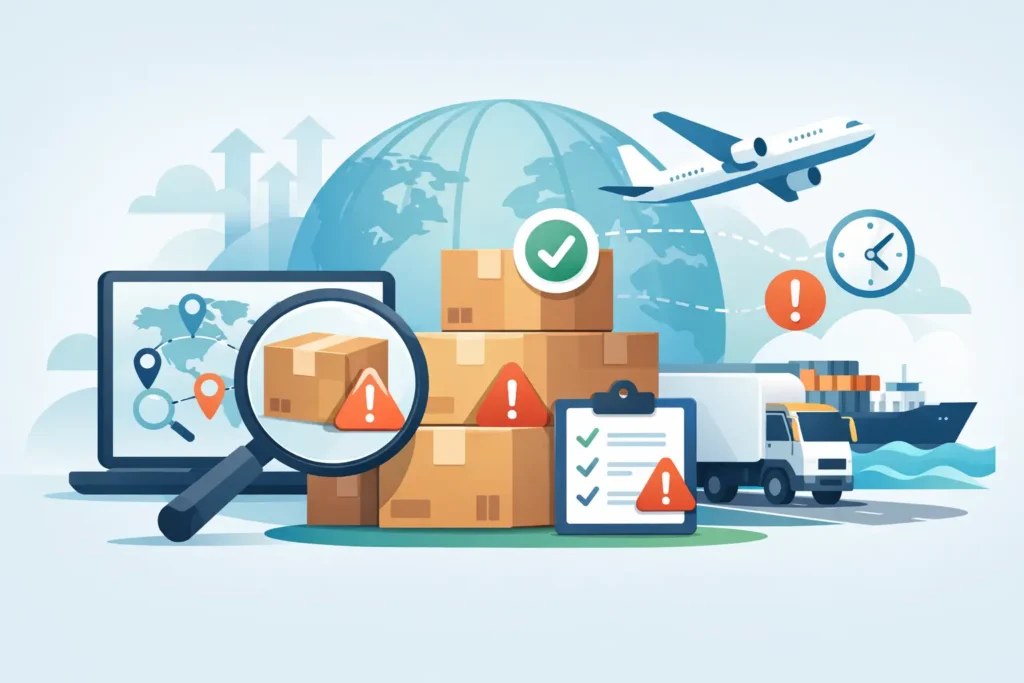
A shipment that is “on the way” is not necessarily under control.
For logistics teams, that gap matters. A truck can be moving and still be drifting off schedule. A customs file can be submitted and still be missing one field that holds the load at the border. A customer can see a delivery ETA and still be completely unprepared for a late arrival. Visibility is only useful when it helps people act early enough to change the outcome.
That is why any serious shipment visibility and exception management guide has to address two questions at once: what you can see, and what you do when the data shows risk.
What shipment visibility actually means
Shipment visibility is often reduced to tracking dots on a map. That is only one layer of it. In practice, visibility means having timely, usable information about where a shipment is, what condition it is in, whether it is moving according to plan, and which event is likely to happen next.
For an operations manager, that might mean seeing whether a cross-border load departed on time, reached the customs checkpoint, cleared documentation review, and is still tracking to the promised delivery window. For a procurement lead, it may mean understanding whether a delay will affect inventory availability or customer commitments. For the end customer, visibility is simpler – when will it arrive, and should I be concerned?
Good visibility turns fragmented updates into one operational view. That includes location data, milestone timestamps, route progress, handoff status, proof of delivery, and communication history. If those pieces live in separate systems or arrive too late to act on, teams still end up chasing answers manually.
Why visibility without exception management falls short
A lot of businesses invest in tracking first and process second. They gain more data but not necessarily better control. The result is familiar: dashboards look modern, yet teams still rely on calls, email chains, and last-minute escalation when something slips.
Exception management is the discipline that gives visibility value. It defines which events count as a problem, how quickly they must be reviewed, who owns the response, and what corrective action is acceptable.
In a practical shipment visibility and exception management guide, exceptions usually fall into a few categories. Time-based exceptions include late pickup, missed checkpoint, route deviation, or risk of missed delivery slot. Documentation exceptions include missing customs paperwork, invoice mismatches, or incomplete consignee details. Physical exceptions include damage, temperature variance, or failed delivery attempts. Communication exceptions happen when the right people are not informed at the right time.
The key point is simple: seeing a problem is not the same as managing it. If your team spots a delay at 4:00 p.m. but the customer finds out at 6:00 p.m. after calling in angry, your visibility program did not do its job.
The core components of an effective system
A workable model starts with milestone design. Every shipment should have a defined journey with expected checkpoints, not just an origin and destination. Pickup confirmed, departed facility, border arrival, customs cleared, final-mile handoff, and delivered are all examples. Those milestones create the baseline against which exceptions can be identified.
The second component is data quality. Real-time tracking matters, but clean order data matters just as much. If addresses, reference numbers, service levels, customs details, or contact information are wrong at booking, even the best tracking system will produce confusion. Poor input creates false alerts and wasted response time.
The third component is exception logic. Teams need thresholds that reflect operational reality. For example, a 20-minute variance in urban courier traffic may not require intervention, while a 90-minute delay on a booked warehouse slot could trigger immediate action. Not every deviation deserves escalation. If thresholds are too sensitive, teams start ignoring alerts. If they are too loose, issues surface too late.
The fourth component is ownership. Every exception needs a named response path. That may sit with a control tower team, a local dispatcher, a customs specialist, or a customer service manager depending on the shipment type. Shared visibility without shared accountability usually creates duplication and delay.
Building an exception workflow that works in real operations
The strongest workflows are boring in the best way. They are repeatable, documented, and easy to execute under pressure.
Start by classifying exceptions by business impact. A route delay on a low-priority parcel should not be handled the same way as a temperature-sensitive shipment approaching a border hold. Severity levels help teams focus attention where service failure or financial loss is most likely.
Next, define response windows. If a shipment misses a milestone, how long can it stay unreviewed? Five minutes, thirty minutes, two hours? The answer depends on mode, cargo, service promise, and customer expectation. Cross-border transport usually requires tighter operational review around customs and transit milestones than standard domestic parcel movement.
Then define actions, not just alerts. If customs documents are incomplete, the workflow should specify who checks the file, who contacts the shipper, what fallback documents are acceptable, and how the customer is updated. If a driver is off route, the workflow should state whether dispatch calls the driver first, reroutes around traffic, revises ETA automatically, or escalates immediately.
Finally, close the loop with communication. Internal teams need enough detail to act, while customers need concise, accurate updates with a revised expectation. Too much information creates noise. Too little creates distrust. The best standard is this: communicate early, explain clearly, and only promise what operations can actually deliver.
Where technology helps and where process still decides the outcome
Real-time map tracking, GPS telemetry, automated alerts, API integrations, and digital proof of delivery all improve control. They reduce blind spots and shorten the time between event and response. For companies managing transport, travel, and local delivery in one operating environment, connected systems also reduce handoff friction between teams.
But technology does not eliminate trade-offs. More data can expose more exceptions than a team is prepared to handle. Automated ETAs are useful, yet they can mislead if route assumptions do not reflect border congestion, appointment rules, or local traffic restrictions. A platform can identify risk quickly, but people still decide whether to rebook, reroute, hold, or escalate.
That is where operational discipline matters. A modern provider should combine tracking with documented processes, 24/7 proactive support, and transparent communication. At Alconedo, that is the practical standard across movement services because customers do not buy tracking for its own sake. They buy predictability.
Common failure points to fix first
Most visibility programs do not fail because the software is missing one feature. They fail because the operating model is inconsistent.
One common issue is fragmented ownership. Transport, customer service, warehouse teams, and external carriers may all see the same shipment differently. Without a common exception protocol, each team assumes someone else is handling it.
Another issue is overreliance on manual status updates. Manual updates still have a place, especially for customs or complex handoffs, but they should fill gaps rather than carry the whole process. If staff must constantly request status from partners, visibility becomes reactive.
A third issue is poor customer messaging. Some teams wait until the delay is confirmed beyond doubt before they say anything. That feels safer internally, but it usually weakens trust. Early notice with a qualified ETA is often better than silence followed by a missed promise.
How to measure whether your approach is working
The right metrics should show whether visibility leads to faster intervention and better service outcomes. On-time delivery is still central, but it is not enough on its own.
You should also watch exception detection time, response time, percentage of exceptions resolved before customer impact, ETA accuracy, failed delivery rate, claims related to delay or damage, and the number of customer inquiries per shipment. If customer inquiries stay high after a visibility upgrade, that usually signals that the data is not clear, not trusted, or not reaching people when they need it.
It also helps to compare lanes and shipment types separately. A domestic same-day courier service, a scheduled European linehaul, and a customs-sensitive cross-border movement operate under different constraints. One rule set rarely fits all of them.
Choosing the right level of visibility for your operation
Not every business needs the same depth of monitoring. A company moving high-value, time-critical, or regulated goods should invest in tighter milestone control and faster escalation. A business shipping lower-value replenishment stock may accept broader ETA windows and lighter-touch intervention.
The point is not to monitor everything at maximum intensity. The point is to match visibility and exception response to commercial risk, customer promise, and operational complexity.
A useful test is this: if a shipment goes off plan, how quickly can your team identify the issue, understand the likely impact, assign responsibility, and communicate the next step? If that answer is measured in hours instead of minutes for priority movements, there is room to improve.
Shipment visibility earns its place when it supports decisions, not just observation. The businesses that perform best are not the ones with the most alerts on screen. They are the ones that know which alerts matter, who acts, and how to recover service before a small variance becomes a customer problem.
